
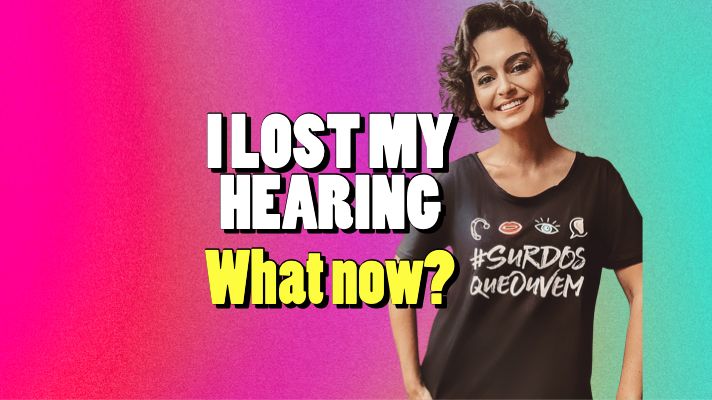
“I lost my hearing. What now?” is a question many people find themselves asking. It doesn’t only apply to sudden hearing loss—it also speaks to the exact moment someone finally admits to themselves that their hearing isn’t what it used to be. Whether it’s a sudden shift or a gradual realization, the question remains: what’s next?
Step Out of the Hearing Loss Closet
It may sound odd, but it’s a crucial step. The worst thing you can do is treat hearing loss as a secret or a source of shame. Pretending it isn’t happening only makes life harder. Be open about it—you can’t actually hide hearing loss, and life becomes much simpler when you face reality head-on. Don’t shy away from telling others about your difficulties, and don’t set the unrealistic expectation that you must hear exactly like a person with normal hearing. It isn’t helpful, and it isn’t necessary.
Seek Out a Specialist
Don’t waste time with the opinions of neighbors or relatives. And for the love of your ears, avoid “Dr. Google” and any “miracle cures.” The true starting point is finding an otolaryngologist (ENT doctor) who understands hearing loss inside and out. They are the ones who will provide the correct diagnosis and treatment plan.
Understand Your Condition
Many people describe their hearing loss in percentages, saying things like, “I have 70% in one ear and 25% in the other.” Hearing loss doesn’t work that way. You owe it to yourself to get properly informed. Make it your mission to learn how to read your audiogram and understand your specific case. The more you know, the better you can manage it.
Find an Audiologist You Can Trust
While your ENT doctor gives you the medical diagnosis, your audiologist is the professional who will walk you through the rehabilitation process. They will help you choose hearing aids, guide you through the adaptation phase, and conduct further testing if a cochlear implant becomes necessary in the future.
Find an audiologist you genuinely connect with. You will work closely with this person for a long time, navigating both frustrating milestones and major breakthroughs. Keep in mind that hearing aids are not a magic fix—they are advanced tools designed to help you make the most of your residual hearing.
Research Your Hearing Aids Thoroughly
If hearing aids are in your future, view them as the start of a new chapter. There are countless brands and models available, but because hearing loss is as unique as a fingerprint, what works perfectly for a friend might not work for you.
Do your homework. Talk to your audiologist, read reviews, and connect with other users. Always test at least three different brands before making a final decision. Hearing aids are a major investment in your quality of life, so take the time to get it right.
Build a Community
This is perhaps the best advice I can offer. In 2010, I started a digital platform in Brazil called Crônicas da Surdez, and by simply sharing my story, I’ve been able to help thousands of people.
You can find excellent support groups and communities online where you can ask questions, share experiences, and connect with others. You are not alone—there are 1.5 billion people worldwide living with hearing loss. Reach out, and you will find your community.
ANY QUESTIONS?
Paula Pfeifer is a brazilian writer. Two of her books about hearing loss, hearing aids and cochlear implants can be found in english and spanish in Kindle.
SOCIAL MEDIA I AM DEAF BUT I CAN HEAR
Ver essa foto no Instagram
Continue lendo nesta categoria
Hearing Loss
- Hearing Loss Support Group in Portuguese: CLUBE Surdos Que Ouvem
- Hearing Loss: What I Wish Someone Had Told Me
- Top 3 Alarm Clocks with BED SHAKER for Hearing LOSS in 2026
- Top 10 FRUSTRATIONS of Living with HEARING LOSS in 2026
- The blues caused by HEARING LOSS
- Advice for MOTHERS of children with HEARING LOSS in 2026
- Tips for ELDERLY people with HEARING LOSS in 2026
- How to adapt to the COCHLEAR IMPLANT in 2026
- Bilateral COCHLEAR IMPLANT: Top reasons to do in 2026
- 6 ESSENTIAL Products for people with HEARING LOSS in 2026
- The Social and emotional impacts of HEARING LOSS in 2026
- Letter to my mother about my HEARING LOSS
- 5 SECRETS to deal with HEARING LOSS in 2026
- Your LOVE LIFE when you have HEARING LOSS in 2026
- 8 books for KIDS with HEARING LOSS in 2026
- What it’s like to HEAR with a COCHLEAR IMPLANT in 2026
- 5 questions to ask yourself before getting a COCHLEAR IMPLANT
- Top 5 Marketing mistakes of the hearing industry in 2026
- Are you ASHAMED of your HEARING LOSS?
- The BEST HEARING AID in 2026: Advices from a HEARING AIDS USER