
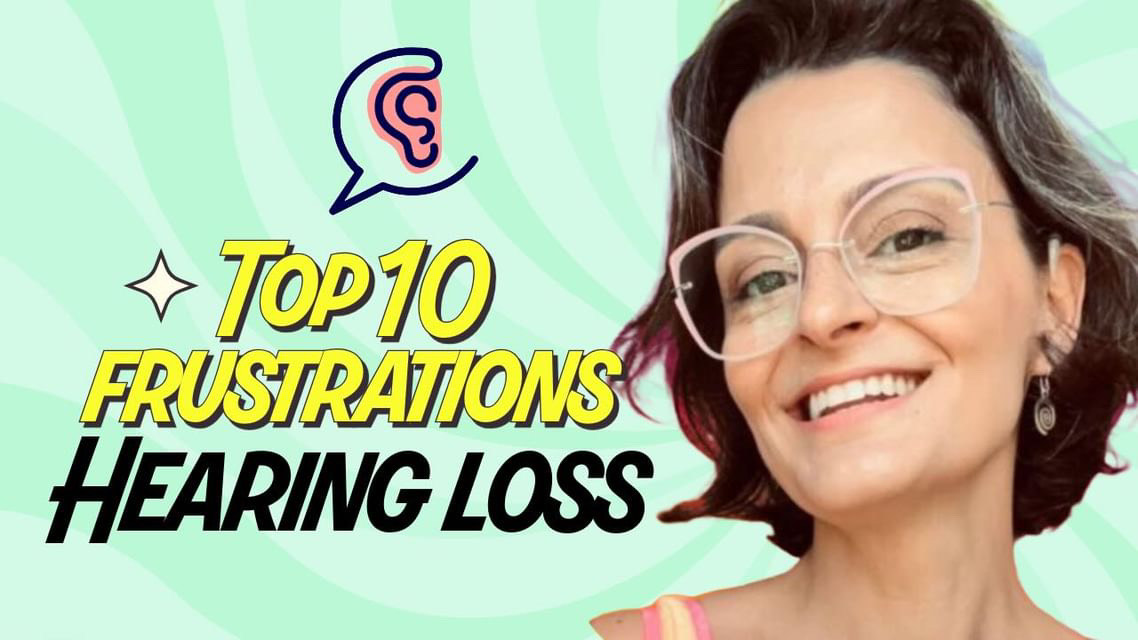
Throughout my journey with hearing loss, I faced numerous challenges, but I also discovered ways to overcome them with resilience and optimism. Today, as a cochlear implant user, I can hear and understand perfectly. However, I will never forget the difficulties of the years I spent using hearing aids. Here, I share the top ten frustrations of living with hearing loss and how I overcame them, hoping to inspire and encourage those still facing these battles.
Top 10 Frustrations of Living with Hearing Loss
-
Difficulty Following Group Conversations
-
Feeling of Social Isolation
-
Challenges in the Workplace
-
Insecurity While Driving
-
Barriers in Telephone Communication
-
Challenges in Academic Life
-
Disadvantages in Recreational Activities
-
Challenges in Noisy Environments
-
Problems with Hearing Aids
-
Stigma and Misunderstanding
Difficulty Following Group Conversations
I often felt lost during group conversations, unable to keep up with the fast flow of banter and discussion. To cope, I developed lip-reading skills, used personal amplification devices, and learned to position myself strategically in quieter areas of a room.
Feeling of Social Isolation
The feeling of isolation was constant, especially in loud social environments where I couldn’t fully participate. Seeking support, I looked for groups of people experiencing the same thing, where I found genuine understanding and friendship. Being part of these connections helped me feel less alone. Ultimately, I ended up creating the largest digital community for people with hearing loss in Latin America: Clube dos Surdos Que Ouvem.
Challenges in the Workplace
Understanding colleagues and clients was a major hurdle, which often took a toll on my productivity and confidence. I adopted assistive technologies, like FM systems, and requested reasonable adjustments at work, such as holding meetings in quieter spaces and relying on written communication whenever possible.
Insecurity While Driving
I used to feel insecure behind the wheel, especially when I couldn’t hear sirens or horns. To adapt, I made sure my mirrors were always perfectly adjusted for maximum visibility, and I never drove without my hearing aids.
Barriers in Telephone Communication
Phone conversations were particularly stressful, frequently leading to misunderstandings. By the time I turned 18, I could no longer use the phone at all. I adapted by switching completely to text messages and emails for my daily communication.
Challenges in Academic Life
Following classes and lectures was exhausting, as I often couldn’t hear the teachers clearly. I relied heavily on borrowing notes from classmates and spent countless hours studying independently at home to keep up.
Disadvantages in Recreational Activities
Going to the movies or attending live shows was often frustrating due to the lack of clear sound. I adapted by choosing to watch movies at home with subtitles so I wouldn’t miss anything.
Challenges in Noisy Environments
Restaurants and crowded social events made holding a conversation nearly impossible. I learned to choose venues with quieter seating options and always suggested calmer places to friends when planning gatherings.
Problems with Hearing Aids
Dealing with progressive hearing loss alongside the constant maintenance and troubleshooting of hearing aids was deeply frustrating. I managed this by keeping a strict maintenance routine, always carrying spare batteries, and working closely with my audiologist for frequent adjustments.
Stigma and Misunderstanding
I frequently faced prejudice and a lack of awareness from people who didn’t understand the nuances of hearing loss. Realizing it wasn’t their job to automatically know the details of my condition, I took it upon myself to educate those around me, explaining exactly how they could help and promoting better awareness.
Each of these challenges made me stronger and prepared me to embrace the technological advancements that eventually transformed my life. Today, I celebrate the clarity and joy of hearing, but I never forget the lessons learned along the way. Perseverance, a supportive community, and practical solutions were the keys to overcoming adversity and achieving a full, rewarding life.
ANY QUESTIONS?
Paula Pfeifer is a brazilian deaf writer, a Social Scientist, content strategist, speaker and consultant. She is also a accessibility and disability advocate. She lives in Rio de Janeiro with her husband – Dr. Luciano Moreira, ENT fully focused on hearing loss and hearing surgeries – and has a son, Lucas. Two of her books about hearing loss, hearing aids and cochlear implants can be found in english and spanish in Kindle. Support Paula Pfeifer’s work. You can support here!
Read all the posts about hearing loss
Continue lendo nesta categoria
Hearing Loss
- Hearing Loss Support Group in Portuguese: CLUBE Surdos Que Ouvem
- Hearing Loss: What I Wish Someone Had Told Me
- Top 3 Alarm Clocks with BED SHAKER for Hearing LOSS in 2026
- I LOST MY HEARING in 2026
- The blues caused by HEARING LOSS
- Advice for MOTHERS of children with HEARING LOSS in 2026
- Tips for ELDERLY people with HEARING LOSS in 2026
- How to adapt to the COCHLEAR IMPLANT in 2026
- Bilateral COCHLEAR IMPLANT: Top reasons to do in 2026
- 6 ESSENTIAL Products for people with HEARING LOSS in 2026
- The Social and emotional impacts of HEARING LOSS in 2026
- Letter to my mother about my HEARING LOSS
- 5 SECRETS to deal with HEARING LOSS in 2026
- Your LOVE LIFE when you have HEARING LOSS in 2026
- 8 books for KIDS with HEARING LOSS in 2026
- What it’s like to HEAR with a COCHLEAR IMPLANT in 2026
- 5 questions to ask yourself before getting a COCHLEAR IMPLANT
- Top 5 Marketing mistakes of the hearing industry in 2026
- Are you ASHAMED of your HEARING LOSS?
- The BEST HEARING AID in 2026: Advices from a HEARING AIDS USER